
Oh, My Baby!
What it means to love a child you cannot protect from himself

It was a Saturday morning—October 4, 2025.
We had closed on a house about six weeks earlier and were finally ready to move in. The carpet was installed. The walls were painted. Movers were scheduled for four days later. This was our first full day with unrestricted access to the house—the day for oddball items, fragile things, and the “we’ll just run this over real quick” stuff that never actually takes just a minute.
I planned to leave Carter with his brother for the thirty minutes this errand would take. That plan alone felt like progress—those moments were becoming rare as Carter’s behavior had grown increasingly unpredictable.
At the very last second, I hesitated.
I asked him if he wanted to come with me.
He did.
My car was packed with donations, and I promised him that after we dropped everything off, we’d go get the blanket we’d been talking about for days. We followed JD to the new house so I could help him lift a fragile shelf from the back of the truck. Thirty seconds, tops. Then we’d be on our way.
I got out of the car, left it running, and went over to help JD.
We lifted the shelf.
And then I heard the engine rev.
What was that?
No.
No way.
He is not—
I ran.
I could have touched the back of my car, but I couldn’t get to the driver’s door.
He was gone.
I ran.
I mean—I don’t run. And I ran.
I screamed. Loudly. Over and over.
I waited for the inevitable sound of impact. I kept running. Waiting. Listening.
Our new neighbor came outside. I told him my son had taken my car. I described Carter and the vehicle. Without hesitation, this kind stranger jumped on his bike and went searching.
Nothing.
After what felt like an eternity, I turned back toward the house. The garage was open. The truck was gone.
JD had gone after him.
Somehow, I had the presence of mind to close the garage and lock the front door—because clearly that was the priority in this moment. Trauma logic is a fascinating thing.
I started walking down the street.
No purse.
No phone.
No car.
Nothing.
I wandered aimlessly, scanning for my car, listening for sirens, crashes—anything. Where was JD? Did he have him? Oh God, please let him have him.
Then it hit me.
My Apple Watch.
Cellular.
After taking far too long to figure out how to use it—because why would my brain function now?—I called JD.
“Please come get me.”
He hadn’t been able to catch Carter. He came to pick me up. JD never even saw him—Carter had flown out of the neighborhood far too fast.
Oh, my baby.
At least I wasn’t alone anymore. I had my someone.
We didn’t know what to do. We started driving, trying to guess where Carter might go.
We had no clue.
Carter is a thrill-seeker. A right-now kid. He wasn’t running away from anything. He wasn’t running to anything. Trying to predict where this child would go was a fool’s errand.
I called 911—something I had done far too often lately.
“My son has my car. He’s highly impacted. He has autism and an intellectual disability. He’s Black. He’s wearing ———— (I don’t remember now, but I knew exactly then). He’s sixteen. But sixteen unable to drive. He has my car. He cannot drive. I need you to help me find him.”
No, he wasn’t headed anywhere specific.
No, I didn’t know where he was.
I couldn’t track the car. I couldn’t track him. My phone was in the car. JD tried to locate it—nothing. I asked the police if they could track it through the carrier.
We drove aimlessly for what felt like forever.
I prayed out loud.
“God, please keep Carter safe. Keep everyone safe. Let this end without serious injury.”
Then the call came.
They had spotted the car on a traffic camera in—
Lyons.
That’s 34 miles from home.
There was only one possible destination: Estes Park.
It would be a miracle if he made it there—those mountain roads are narrow and winding. State troopers and local police were forming a plan. They would deploy spike strips between Estes Park and Loveland on Highway 34. They told us to head toward The Dam Store where they were staging nearby.
It would take us over an hour to get there.
How fast was this kid going?
JD drove.
I prayed.
Then the phone rang again.
They had him.
He was safe.
I sobbed.
“Mile marker 82,” the officer said.
Chris, Carter’s father, headed to meet Carter at the hospital. I reluctantly headed toward the car.
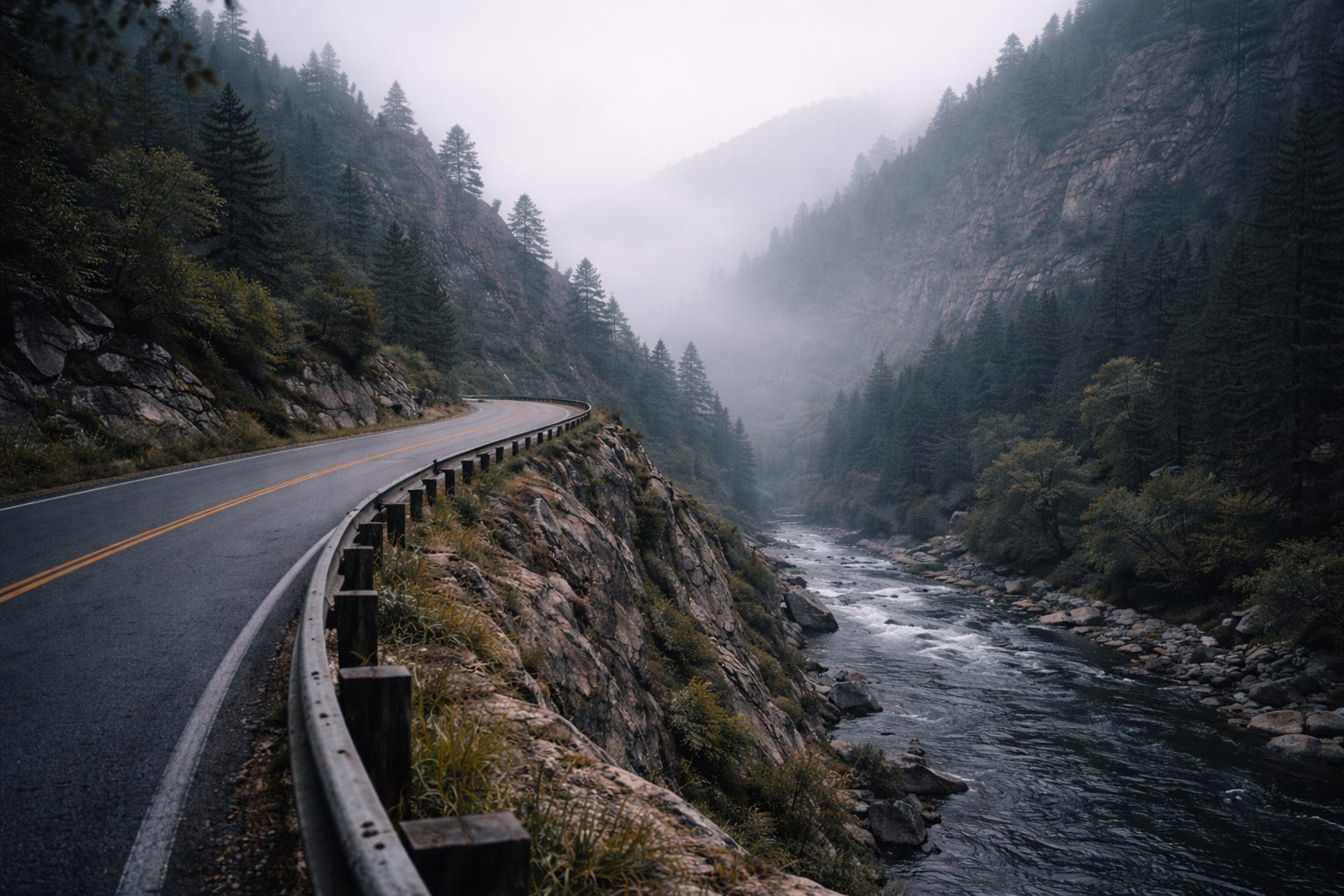
The highway led us into Big Thompson Canyon almost immediately—two lanes, mountains on the left, guardrail on the right, and the Big Thompson River too far down to comprehend.
Then I saw it.
A tow truck.
Two police cars.
My car was totaled.
I mean—totaled.
What? They didn’t tell me he’d been in an accident. Probably a wise choice for my already-fractured nervous system.
I jumped out of the truck.
“What happened? Is he okay?”
“He’s fine,” they said. “He’s en route to the hospital to be checked out. One scratch on his face. He’s okay.”
JD spoke with the officer while I searched for my purse and phone.
Not there.
They had been loaded into the ambulance and sent with Carter.
The car didn’t make sense to my brain.
Airbags deployed.
The roof partially collapsed.
The front bumper hanging off.
Both tires and wheels on the driver’s side destroyed.
The entire side of the car looked like it had scraped along the mountain for a while.
The officer explained: Carter was going approximately 85 miles per hour on the canyon road. He hit gravel, lost control, crossed the highway, struck the guardrail, went up on two wheels—and somehow came back down.
Miraculously, he didn’t go over the guardrail and into the river below.
I couldn’t fully process what I was hearing. Or seeing. Or feeling.
I just needed to get to the hospital.
The officer handed me the accident report and the tow company information. We climbed back into the truck and headed east toward Medical Center of the Rockies.
Silence.
Shock.
I had to stop halfway through and breathe. The way you wrote this mirrors exactly how trauma actually moves—fragmented, urgent, then impossibly quiet. I don’t have anything eloquent to add, only deep respect for your honesty and overwhelming relief that Carter is safe. This is the kind of writing that lingers long after you close the page.